
A broken latch on a dishwasher rack, a missing knob from a vintage stereo, a cracked bracket that the manufacturer stopped selling years ago – these are the kinds of problems that turn a perfectly usable item into dead weight. Custom 3D printed replacement parts offer a practical way to keep those products working, especially when original spares are unavailable, overpriced, or simply never existed as a separate part.
For a lot of people, the hardest part is not knowing whether 3D printing is actually the right fix. Sometimes it is an excellent solution. Sometimes it needs design adjustments, material changes, or a different manufacturing method entirely. That is why the best results come from treating replacement parts as a real engineering job, even when the part itself looks simple.
When custom 3D printed replacement parts make sense
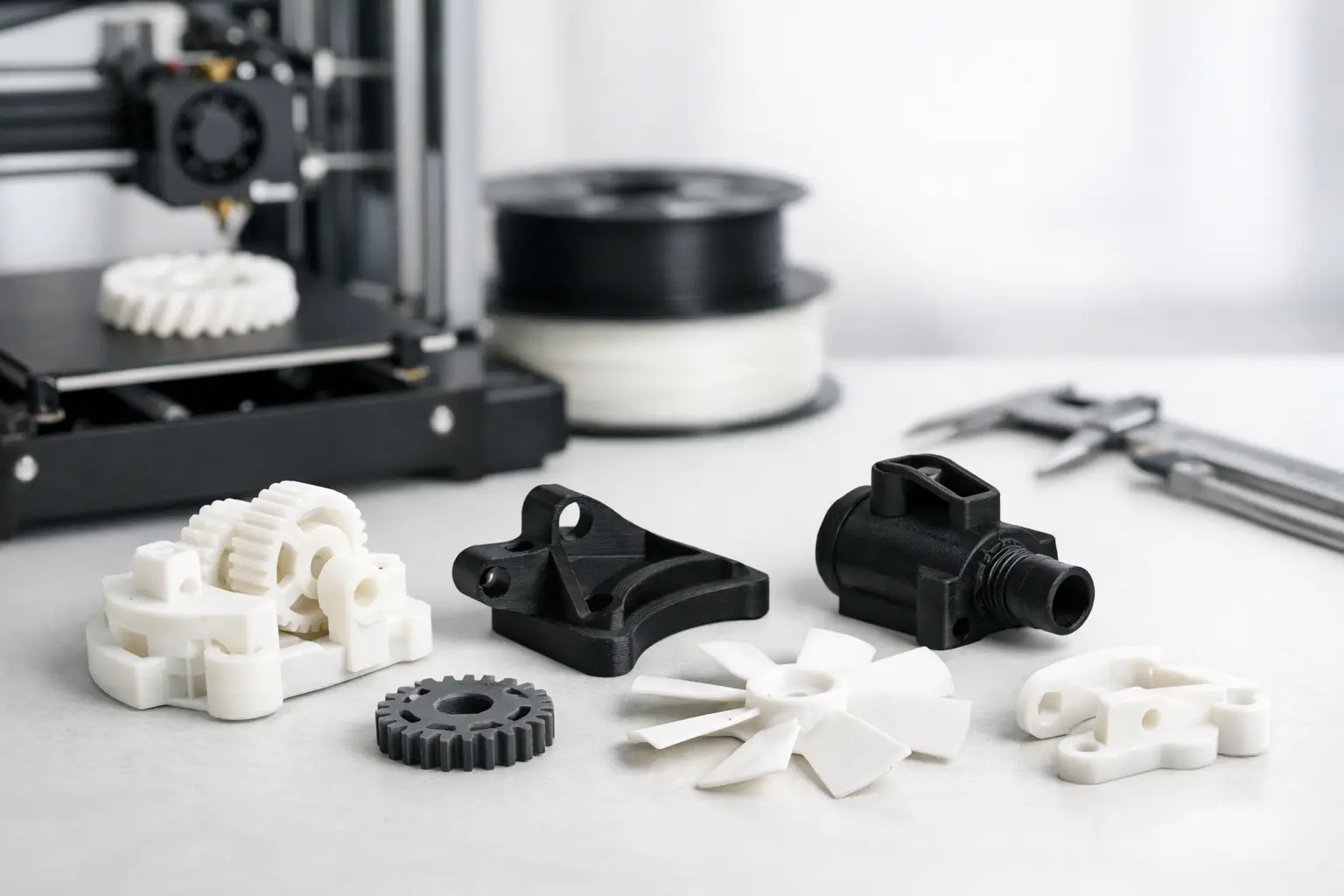
3D printing is especially useful when you need one part, a small batch, or something no longer supported by the original brand. It works well for covers, clips, mounts, spacers, brackets, knobs, housings, adapters, and many other plastic components. If the part is difficult to source but easy to define by shape and fit, printing can be faster and more affordable than hunting for old stock or replacing the whole product.
It is also a strong option when customization matters. A replacement part may need thicker walls than the original, a better mounting hole layout, or a shape tweak to fix a known weak point. That is where custom work stands apart from buying a generic spare. You are not limited to copying a flawed design just because that is what came from the factory.
The trade-off is that not every part should be printed. Components exposed to high heat, heavy impact, fuel, pressure, or strict safety requirements may need specialized materials or another process. A printed plastic gear inside a lightly loaded hobby device might perform well. The same gear in a high-torque machine might fail quickly if the design and material are not chosen carefully.
What makes a replacement part successful
A good replacement part has to do more than look right. It needs to fit correctly, handle the expected load, and work in the environment where it will be used. That sounds obvious, but it is where many rushed prints go wrong.
Fit comes first. Even a small dimensional error can make a snap-fit too loose, a mounting bracket impossible to install, or a lid that rattles every time the product moves. Good custom work accounts for tolerances, printer behavior, and how the part interacts with the original product.
Material choice matters just as much. PLA can be fine for decorative or low-stress parts, but it is not always the best choice for warm environments or mechanical use. PETG is often better for general-purpose durability. ABS, ASA, nylon, TPU, or reinforced materials may be the better fit depending on flexibility, wear, UV exposure, or heat resistance. There is no single best filament for every replacement part. It depends on where and how the part will be used.
Print orientation also affects strength. A bracket printed in the wrong orientation can break along layer lines even if the material itself is solid. This is one reason replacement parts should not be treated as a quick export-and-print job. Small changes in wall thickness, infill strategy, layer direction, and edge geometry can have a big effect on how long the part lasts.
How custom parts are created
There are a few common starting points. The easiest is when a customer already has a 3D file and just needs production. In that case, the work is mostly about checking printability, selecting the right material, and dialing in the print settings for a reliable result.
The next common scenario is having the original broken part but no digital model. That usually means measuring the piece, rebuilding it in CAD, and correcting any damage or wear that has happened over time. If part of the geometry is missing, the design may need to be reconstructed from the remaining features and the way the part connects to the product.
Then there are cases where the original part is gone entirely. That is more involved, but not impossible. Photos, dimensions from the product itself, reference marks, or 3D scanning can all help recreate the shape. For older appliances, hobby equipment, vehicles, and specialty tools, this can be the difference between keeping something in service and scrapping it.
At Wijnbeek 3D, this hands-on process is where custom work becomes useful for people who do not model parts themselves. If you have the broken piece, an idea, or even just a few clear photos, that is often enough to start the conversation and figure out the next step.
Common use cases for custom 3D printed replacement parts
Household repairs are one of the biggest categories. Small plastic pieces fail all the time, and manufacturers often do not sell them separately. Appliance clips, vacuum attachments, drawer runners, hinge covers, cable guides, and storage bin components are all common examples.
Hobby and maker projects are another good match. RC car mounts, tool organizers, gaming accessories, cosplay connectors, and workshop fixtures often benefit from short-run custom printing. These are projects where buying a full replacement assembly may not make sense, but a single tailored part does.
Small businesses also use printed replacement parts to keep equipment and displays working. A custom spacer, cap, fixture, or enclosure might only be needed in small quantities, but downtime still costs money. Being able to replace one odd component instead of replacing a whole system can be a real advantage.
Vintage and discontinued items deserve a special mention. Old audio gear, retro game accessories, legacy machines, and collectible items often fail because one plastic part becomes brittle or disappears. In those cases, custom printing can preserve something that would otherwise be unusable.
What to expect from the process
The better the reference material, the smoother the job. If you have the original part, keep all the pieces, even if it is cracked. A broken part still provides valuable information about dimensions, mounting points, and overall geometry. Clear photos from multiple angles help too, especially if a piece is missing.
Once the part is assessed, the next step is deciding whether it should be copied exactly or improved. Exact copies are sometimes the right choice, especially when the original geometry must interface tightly with surrounding parts. But when the factory design is obviously weak, a revised version may offer better long-term performance.
Prototyping is normal for more demanding parts. A first print may be used to confirm fit before the final version is produced in the chosen material. This is not wasted time. It is often the most efficient way to avoid repeated failures later.
Finishing may also matter, depending on the part. Some replacements can go straight from printer to product. Others may need cleanup, threaded inserts, assembly, or cosmetic refinement. Functional parts usually prioritize fit and strength first, but appearance still matters when the piece is visible.
The limits of 3D printing, honestly
Not every broken part should be remade in plastic, and saying otherwise does not help anyone. If a component sits next to a heating element, carries a person’s weight, seals pressurized fluid, or performs a critical safety function, the design requirements become much stricter. In those cases, a printed prototype may still be useful, but the final solution may need machining, molding, metal fabrication, or a certified production route.
That said, many everyday replacement parts do not live in extreme conditions. They just need accurate dimensions, decent toughness, and thoughtful design. For those jobs, 3D printing is not a compromise. It is often the smartest way to get a needed part made quickly without paying for tooling or minimum order quantities.
Why personal support matters with replacement parts
Replacement work is rarely plug-and-play. Customers often come in with a problem, not a polished file. They may not know the material, the dimensions, or the name of the part they need. What they do know is that something broke and they want it fixed without guesswork.
That is why one-on-one support matters so much. A dependable print service helps you figure out what is possible, where the risks are, and what kind of result to expect. Sometimes the answer is a straightforward reprint. Sometimes it is a redesign. Sometimes it is honest advice that another method would be better.
That kind of guidance saves time, money, and frustration. It also leads to better parts.
If you are dealing with a broken plastic component and the original spare is nowhere to be found, custom 3D printing can turn a dead end into a workable repair – and in many cases, a better part than the one you started with.
Leave a Reply