
A prop can look perfect on screen and still fail the second you carry it through a convention hall. That is usually where custom cosplay prop printing earns its keep. It is not just about making a sword, helmet, or blaster look accurate. It is about getting the scale right, choosing a material that can handle wear, and planning a print that can actually be finished without turning into a weekend-killing repair job.
For cosplayers, makers, and first-time builders, that difference matters. A good print gives you a cleaner starting point, less guesswork, and a better chance of ending up with a prop you are proud to carry, photograph, and store for the next event.
Why custom cosplay prop printing beats one-size-fits-all props
Mass-produced props have their place. They are convenient, and some are surprisingly decent for the price. But cosplay is rarely one-size-fits-all. Characters come with oversized weapons, unusual helmets, layered armor, and details that do not translate well into generic store-bought pieces.
Custom printing gives you control where it counts. Scale can be adjusted to your height, hand size, or costume proportions. Parts can be split for easier transport. Mounting points, strap paths, and internal supports can be designed around how you actually plan to wear or carry the prop.
That flexibility is especially useful when a file looks great online but has obvious problems in real life. Maybe a handle is too thin, maybe a blade section is too heavy, or maybe a helmet opening is too narrow to get on comfortably. A custom approach lets those issues get fixed before the print starts instead of after you have already spent time sanding and painting.
What makes a cosplay prop print successful
The best prop prints are not just detailed. They are thought through. Accuracy matters, but so do weight, balance, assembly, and finish quality.
A large prop usually needs to be broken into sections that print cleanly and join securely. That sounds simple until you factor in seam placement. If seams land across a high-visibility detail, finishing takes longer. If connection points are weak, transport becomes risky. Good planning means thinking about the build after the printer is done.
Material choice matters too. Lightweight prints are easier to carry, but very thin sections can flex or crack. Stronger settings add durability, but they also add print time and cost. There is no single perfect setup for every project. A convention-safe staff, a display-only replica, and a prop that gets handled constantly all need slightly different priorities.
Accuracy is more than surface detail
Many people focus on visible details first, and that makes sense. Sharp panel lines, clean curves, and recognizable shapes are what sell the prop at a glance. But fit is just as important.
A gauntlet that looks great but slides around is frustrating to wear. A helmet that matches the source perfectly but traps heat and pinches at the jaw will not stay on for long. With custom cosplay prop printing, adjustments can be made for comfort without losing the overall look.
Finish quality starts before sanding
A lot of finishing headaches begin with poor print planning. Layer lines are normal in 3D printing, but orientation, part splitting, and printer settings affect how visible they are and where they appear. Better prints still need sanding and prep, but they give you less cleanup in the areas people notice most.
That is one reason experienced builders often care as much about print strategy as printer specs. A fast print is nice. A usable print is better.
Who custom cosplay prop printing is best for
It works well for more people than you might think. Beginners often assume custom printing is only for advanced cosplayers with modeling skills, but that is not really the case.
If you already have a finished 3D file, the process is straightforward. You supply the file, confirm scale, talk through materials or color options, and get a print that is ready for assembly and finishing. That is ideal for experienced makers who know what they want and just need reliable production.
If you do not have a file, custom support matters even more. Some projects start with a reference image, a sketch, or an existing part that needs to be recreated. In those cases, design assistance can bridge the gap between an idea and a printable model. That is often the difference between shelving a costume plan and actually finishing it.
It is also useful for people replacing one broken piece rather than building an entire costume. A lost armor clip, damaged accessory, or cracked helmet part does not always mean starting over. Sometimes one well-made replacement is all you need.
Common cosplay props that benefit from custom printing
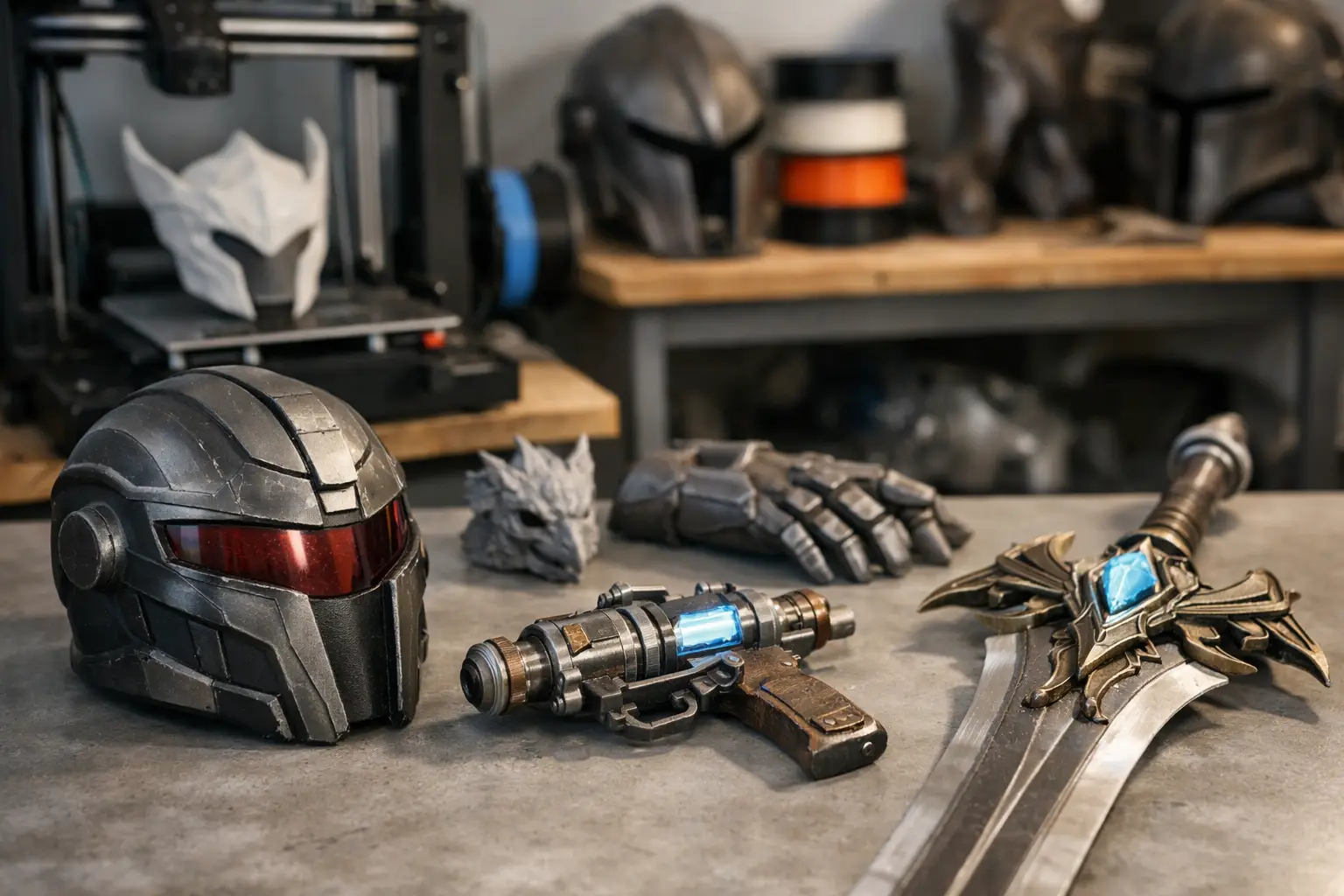
Weapons are the obvious category, but they are far from the only one. Helmets, masks, armor plates, belt accessories, shoulder details, emblems, and display pieces all work well with a custom print approach.
Large hero props benefit because scale and structure can be tuned to the wearer. Smaller accessories benefit because they often need cleaner detail and more precise fit. Even simple pieces like clasps or decorative badges can elevate a costume when they are made specifically for that build instead of improvised at the last minute.
Multicolor printing can also help on select props. It is not the best choice for every project, especially if you plan to sand and paint heavily, but for accessories, logos, or stylized pieces, it can reduce finishing time and produce crisp visual separation right off the printer.
What to prepare before ordering a custom cosplay prop print
You do not need to arrive with technical drawings, but a little preparation helps a lot. The most useful thing you can provide is clarity. What character is the prop for, how accurate do you want it to be, and are you building for display, photos, or all-day convention use?
Reference images help establish shape and finish expectations. Measurements help with scaling. If the prop must fit a specific body part, include that measurement rather than guessing from your height alone. For hand props, grip size matters. For helmets, head circumference matters. For armor, movement range matters.
It also helps to be honest about your finishing plans. If you enjoy sanding, filling, and painting, you can start with a more standard print-ready approach. If you want to minimize cleanup, say so early. That changes how the job may be planned.
Questions worth asking before the print starts
Ask how the part will be split, what material is recommended, and whether the design needs reinforcement in high-stress areas. Ask how visible the seams are likely to be and whether the prop is intended for display or active wear.
Those questions are not nitpicking. They are how you avoid surprises. A dependable print service should be able to explain trade-offs in plain language and steer you toward the right setup for your budget and timeline.
The trade-offs every cosplay builder should know
There is no magic button that gives you the lightest, strongest, cheapest, and smoothest prop all at once. Every project is a balancing act.
If you want maximum detail, print time may increase. If you want a large prop in fewer pieces, shipping and structural concerns may go up. If you want the lowest cost, you may need to accept more finishing work. None of that is bad. It just means the right answer depends on what matters most for that specific build.
Convention rules also matter. Some events have strict policies around prop size, shape, and realism. It is smart to confirm those rules before committing to a large weapon build, even if the print itself is excellent.
Timing is another factor people underestimate. Printing is only one stage. Assembly, sanding, priming, painting, drying, and repairs all take time. If your event is close, a realistic production plan matters more than optimistic guesswork.
Why personal support matters as much as the printer
Cosplay projects are rarely standard jobs. Files need checking. Sizes need adjusting. Some props print beautifully, and others need practical fixes before they are worth making. That is why personal guidance is so valuable.
A hands-on print partner can flag weak areas, suggest better part orientation, and help tailor a build to how you actually plan to use it. For customers who have never ordered a prop print before, that kind of support removes a lot of uncertainty. For experienced makers, it saves time and catches issues early.
That is where a service-focused shop like Wijnbeek 3D fits naturally. Good equipment matters, but so does having someone on the other side who will look at your project, answer clearly, and help you make smart choices instead of just pressing print.
Custom cosplay prop printing works best when it feels less like ordering a generic product and more like building the right starting point for your costume. If the prop fits, holds up, and finishes the way you hoped, the whole costume feels more complete – and a lot more fun to wear.
Leave a Reply