
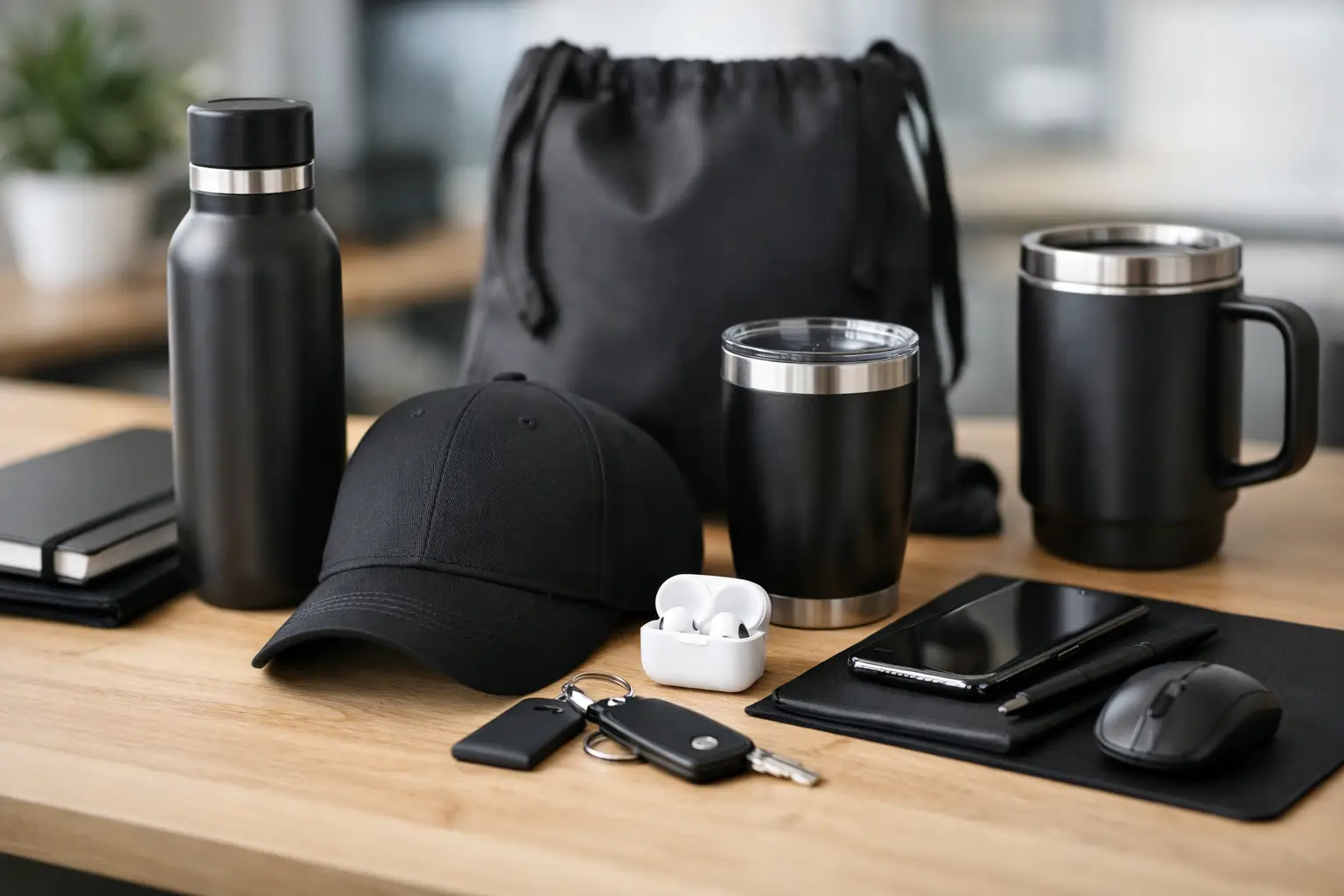
A cheap giveaway gets tossed in a drawer. A useful one sticks around on a desk, keyring, or shelf for months. That is the real difference with custom branded promotional items – not just putting your logo on something, but creating an item people actually want to keep.
For small businesses, events, makers, and local brands, that difference matters. If you are spending money on promo products, you want more than a quick handout. You want something that reflects your brand, feels well made, and gives people a reason to remember you after the event table is packed up.
Why custom branded promotional items still matter
Promotional products work best when they are practical, specific, and tied to the way your audience lives or works. A generic item might get a glance. A well-chosen one becomes part of someone’s routine.
That is why physical products still hold value, even in a market full of digital ads and email campaigns. A printed object has staying power. People touch it, use it, and see it repeatedly. That repeated exposure is hard to match with a one-second scroll.
There is also a trust factor. When a business hands out something that feels thoughtful and well produced, it says a lot without needing a sales pitch. It suggests care, attention to detail, and a willingness to invest in quality. For a small company, that can be more persuasive than trying to sound bigger than you are.
What makes a promotional item worth keeping
The best promotional products usually do one of three things. They solve a small problem, add a bit of fun, or fit naturally into a person’s space. Sometimes they do all three.
A useful branded item does not need to be expensive. It just needs to make sense. A custom keychain for an automotive shop, a cable organizer for a tech service, or a desk accessory for an office-focused brand all feel more relevant than a random trinket with a logo printed on it.
This is where custom production has a real advantage. Instead of choosing from the same catalog as everyone else, businesses can create pieces that match their audience more closely. Shape, size, color, and function can be adjusted to fit the use case. That makes the final item feel less like filler and more like a small product.
Why 3D printing changes the conversation
Traditional promo items are often built around volume. You choose a standard product, add artwork, and order a large batch. That works in some cases, but it can be limiting if you want something more distinctive or only need a short run.
3D printing opens up a different path. It makes custom branded promotional items far more flexible, especially for small businesses, niche brands, and event-specific campaigns. You are not locked into a fixed mold or a massive minimum order just to make the numbers work.
That flexibility matters if you want to test an idea, create multiple variations, or produce a design with details that standard promotional products cannot easily handle. Raised logos, custom shapes, multi-part pieces, and branded items tied to a specific product line or event theme all become more realistic.
There are trade-offs, of course. 3D printing is not always the cheapest option for very high-volume, simple products. If you need thousands of identical basic items, conventional manufacturing may still win on unit cost. But for short runs, specialty items, and more creative formats, 3D printing often makes better sense.
Good custom branded promotional items start with the audience
A lot of disappointing promo products fail at the same point – they were chosen based on what the business wanted to hand out, not on what the customer would actually use.
A better starting point is simple. Ask where the item will end up. In a pocket? On a desk? In a workshop? Attached to a bag? Sitting on a shelf at home? Once you know the environment, the product gets easier to define.
If your audience is hands-on, practical items tend to do well. If your audience includes collectors, fans, or hobbyists, display pieces and branded character-style objects can carry more value. If the setting is a trade show, the item needs to be lightweight, easy to hand out, and simple to understand in a few seconds.
The strongest promo products feel like they belong to the people receiving them. That is why one brand might do well with a functional tool-shaped keychain while another gets better traction from a decorative desk piece. It depends on the audience, the setting, and the goal.
Design choices that make a bigger impact
The most effective branded items are usually clear, not crowded. Too much text, too many graphics, or trying to cram every part of your identity into one small object can make the result feel busy and less useful.
A clean logo treatment, recognizable brand colors, and a shape that supports the function usually go further than over-designing. This is especially true with 3D printed products, where form is part of the appeal. The object itself can do branding work before someone even notices the logo.
Color also deserves more attention than it often gets. Matching brand colors closely can help reinforce recognition, but contrast and readability matter just as much. A dark logo on a dark base may be technically accurate and still look weak in practice. Sometimes the better branding choice is the one that reads clearly from a few feet away.
Durability is another design decision, not just a production detail. Thin parts, tiny hooks, or decorative features that snap easily will hurt the impression you are trying to make. A promotional item should feel sturdy enough to survive normal use. If it breaks on day two, it is doing the opposite of brand building.
When short-run custom items make the most sense
Not every business needs 500 or 5,000 pieces at once. In many cases, smaller runs are the smarter move.
Short-run production is useful when you are testing a new campaign, attending a local event, or creating limited giveaway items for a product launch. It also helps when different customer groups need different versions. A real estate office, for example, may want one branded item for open houses and another for client thank-you packages. A maker brand might want event exclusives that change from show to show.
This is one of the areas where a hands-on production partner makes a difference. If you can adjust a design, review a prototype, and make changes before committing to a full batch, you reduce waste and improve the result. That matters a lot more than just chasing the lowest unit price.
Common mistakes to avoid
One mistake is choosing an item that only works as a logo surface. If the product has no real use, people notice. Another is making the branding too aggressive. A promotional product should represent your business, not feel like an ad someone is expected to carry around for your benefit.
There is also the issue of poor fit between product and brand. A premium service handing out flimsy items creates a mismatch. A practical business giving away something overly novelty-driven can miss the mark too. The item should feel consistent with the way you want your business to be remembered.
Lead time is another area where businesses get caught off guard. Custom work takes planning, especially if design help, prototyping, or color adjustments are involved. Rushing often leads to compromises that could have been avoided with a little more time upfront.
A smarter way to think about ROI
Return on investment is not just about how many items you can buy for a set budget. It is about how long the item stays in use, how often it gets seen, and whether it creates a positive impression of your business.
A lower-cost giveaway that gets discarded quickly may not be a bargain at all. A better-made custom item that people keep for months can generate far more value, even at a higher unit price. That is especially true for businesses that rely on repeat visibility, referrals, or strong local recognition.
For many small businesses, the goal is not mass exposure. It is memorable exposure. You want people to remember who gave them the item, why it felt useful, and what that says about the business behind it.
That is where thoughtful production matters. At Wijnbeek 3D, the most effective projects tend to come from customers who start with a clear purpose, stay open to design advice, and focus on usefulness over novelty for novelty’s sake.
Custom branded promotional items work best when they feel like real objects with a job to do. If they solve a problem, fit the audience, and reflect your brand honestly, they do not need to shout for attention. People keep them, use them, and remember where they came from.
Leave a Reply