
A broken latch, a missing appliance knob, a gift idea you cannot find anywhere, a prototype that needs to be held in your hand before it makes sense – this is where custom 3d printing services stop being a novelty and start being genuinely useful. For many people, the hard part is not the idea. It is turning that idea into a real, accurate object without buying equipment, learning CAD, or wasting time on trial and error.
That gap is exactly why custom work matters. Good service is not just about running a printer. It is about helping someone move from problem to finished part with clear advice, realistic expectations, and a result that actually fits the job.
What custom 3d printing services really include
People often assume 3D printing begins with a finished digital file. Sometimes it does. If you already have an STL or other printable model, the process can be straightforward: upload the file, review the part requirements, choose material and finish options, and move into production.
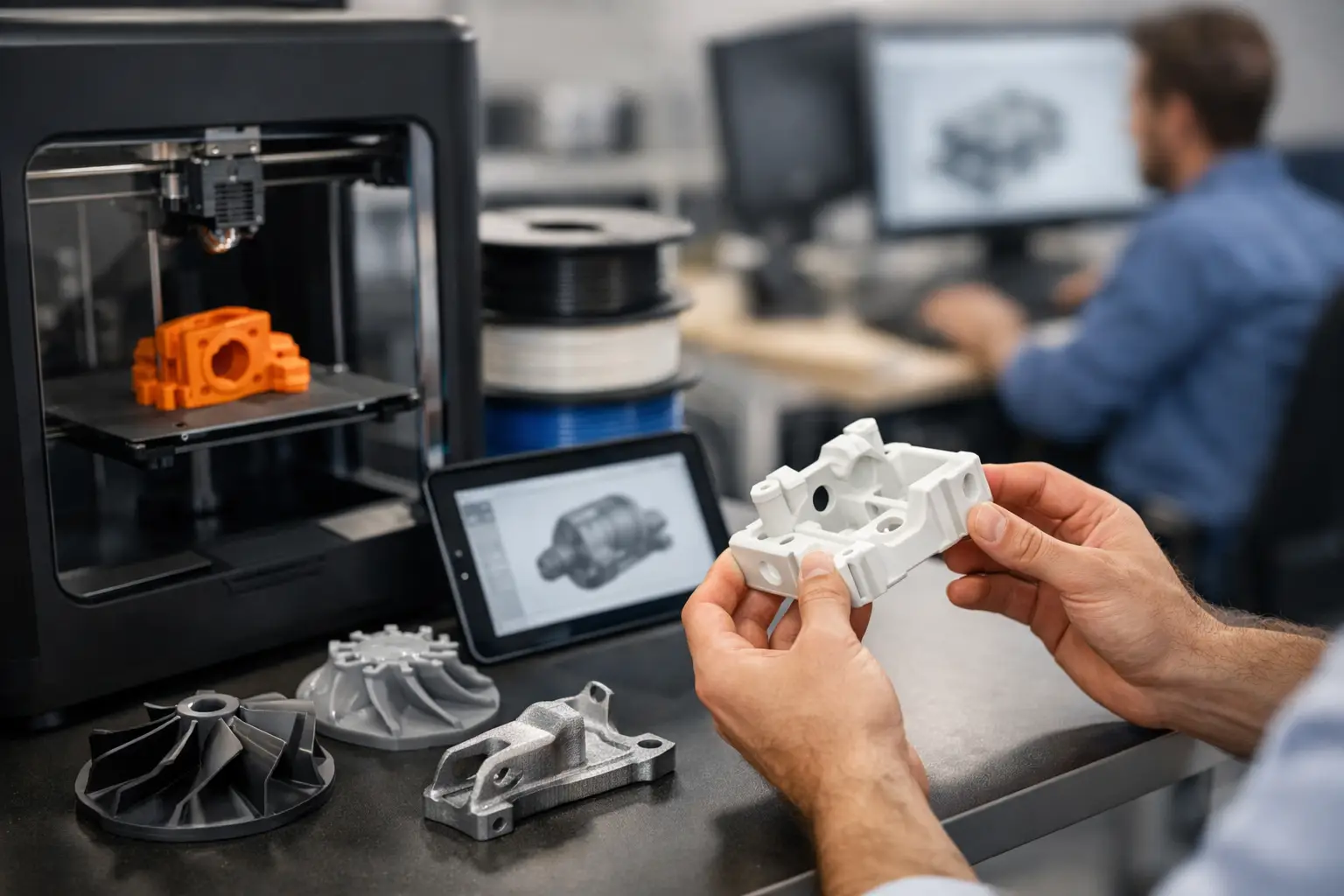
But a large share of real-world projects start much earlier than that. A customer may only have a sketch, a rough measurement, a damaged original part, or a product idea they cannot model themselves. In those cases, custom 3d printing services often include design support, file repair, sizing adjustments, and sometimes 3D scanning to recreate or duplicate an object.
That broader support is what makes the service accessible to beginners and useful to busy small businesses. You do not need to become a designer just to get one replacement part made. You also do not need to run your own machines to test a new concept or order a short production run.
When custom 3d printing services make the most sense
The best use cases are usually specific. If you need ten thousand units at the lowest possible per-piece cost, injection molding may be the better path. If you need one part next week, or twenty personalized items with different names, 3D printing is often a much better fit.
This is especially true for replacement parts. Older household products, hobby gear, mounts, brackets, clips, and covers are often hard to source because manufacturers stop carrying them. A custom print can solve a very practical problem without forcing you to replace the entire item.
The same goes for prototypes. Holding a physical part changes how you evaluate shape, size, fit, and usability. On a screen, a design can look finished. In your hand, you may realize a grip needs to be thicker, a wall needs reinforcement, or a mounting point needs to shift by a few millimeters.
Personalized products are another strong match. Nameplates, keychains, decorative pieces, branded items, and gifts all benefit from short-run flexibility. Traditional manufacturing does not like one-offs. 3D printing does.
The difference between printing a file and solving a problem
Not every print job is the same, even when the machine is. The biggest difference usually comes down to whether the service provider is acting like a production vendor or a hands-on project partner.
If you already know your material, tolerances, and model settings, you may only need reliable output. But if you are unsure whether a part should be printed in PLA, PETG, ABS, or resin, you need more than a checkout form. You need someone who can ask the right questions. Will the part sit in heat? Does it need to flex? Is appearance more important than impact strength? Will it be used indoors, outdoors, or under repeated stress?
Those details affect the result more than many first-time customers expect. A part can look excellent and still fail in actual use if the material choice is wrong. On the other hand, a slightly rougher-looking print may be the better option if durability matters most.
This is where a small, responsive service model has a real advantage. You are not pushed into a generic order flow. You can explain what the part needs to do, and the print process can be tailored around that purpose.
How quality is judged in custom 3d printing services
Customers usually notice appearance first, but print quality is more than smooth surfaces. Accuracy, consistency, layer bonding, and proper settings all matter. If a replacement part is off by a small amount, it may not fit. If a bracket has weak adhesion, it may snap along layer lines under load.
A dependable service looks at both cosmetic and functional performance. That includes printer calibration, material handling, orientation choices, support strategy, and realistic communication about what 3D printing can and cannot do.
For example, multicolor printing can create impressive visual results, especially for gifts, collectibles, and display pieces. But not every part needs that complexity. Sometimes a single-color engineering-focused print is the smarter choice because it reduces cost or speeds up turnaround.
There is always some trade-off between speed, finish, strength, and budget. Honest guidance matters more than promising perfection on every metric at once.
Design help matters more than most people think
One of the biggest barriers for new customers is simple: they do not have a printable file. They may have measurements, photos, or a broken original part, but no 3D model.
That should not be the end of the project. Design assistance is often the difference between an idea staying stuck and becoming a finished product. A good design process does not need to be overly technical for the customer. It should feel clear and collaborative. You describe the need, share dimensions or reference photos, review a proposed approach, and then move toward production.
This is especially useful for custom gifts, small business product concepts, home organization tools, cosplay accessories, and replacement components. Beginners need support without feeling talked down to. More advanced customers may only need help cleaning up a file, improving printability, or adjusting a design for better strength.
At Wijnbeek 3D, that practical, one-on-one approach is a major part of what makes custom work easier to start.
3D scanning and duplication open up more options
Sometimes the part you need already exists physically, but not digitally. That is where scanning becomes valuable. If you have an original object that needs to be reproduced, adapted, or reverse-engineered, 3D scanning can provide a starting point that is much faster than rebuilding everything from scratch.
This is helpful for discontinued parts, legacy items, decorative pieces, and objects with shapes that are difficult to measure by hand. Scanning is not magic, though. Depending on the part, the digital result may still need cleanup, remodeling, or dimensional adjustment before it is ready to print accurately.
That is a good example of why expectations matter. The best custom 3D printing services do not pretend every object can be copied perfectly with one button press. They explain the process, identify what is possible, and suggest the right next step.
What to look for before placing an order
If you are comparing providers, pay attention to responsiveness as much as machine specs. Good equipment matters, but communication matters just as much. If your part has to fit another component, material and tolerance guidance should be part of the conversation.
It also helps to look for a service that supports different customer paths. Some people want to upload a ready file and move quickly. Others need design help, scanning, or advice on how to make a part manufacturable. A strong provider can handle both without making the process feel confusing.
Turnaround time is another practical factor. Fast production is valuable, but only if quality stays consistent. The right partner will be upfront about timing, revisions, and any details that could affect the final result.
For decorative or gift items, visual finish and color options may be the priority. For functional parts, durability and fit should lead the discussion. A good shop will not treat those two projects the same, because they are not the same.
Why custom 3d printing services keep growing
The appeal is simple. People want useful products made for their actual needs, not just what happens to be available on a shelf. Small businesses want affordable short runs. Hobbyists want custom parts without investing in more equipment. Consumers want replacement components that save items from being thrown away. Creators want prototypes and personalized products without committing to mass production.
Custom 3d printing services meet those needs because they are flexible. They work well for one piece, small batches, practical fixes, and creative ideas. The technology is a big part of that story, but the service side is what makes it work for real customers.
If you are considering a custom print, start with the problem you need to solve, not the printer itself. The right service will help you figure out the rest and get you to a result that feels made for a reason.
Leave a Reply